Financial mismanagement, corruption, and incompetence in Malawi is having a massive impact on the country’s population. There is also a complete lack of confidence in the country’s political powers. The country’s poverty levels have risen to record levels, further increasing inequality. Malawi, a nation of 21 million people, is already ranked among the poorest globally.
In February 2025, the Salaam Foundation team visited the rural areas of Malawi where the situation was devastating. Communities that are already vulnerable have found themselves in even worse situations. People are unable to afford the most basic of food items like mielie meal. The prices of daily necessities have been increasing daily. Many Malawians rely on subsistence farming which is highly susceptible to weather shocks especially as the effects of climate change. Many families are unable to eat for several days on end. While the entire country is feeling the effects, it is those in rural areas who are suffering even more.
You may not know this, but the situation in Malawi is devastating.
Provide Ramadan meals for a family of 5 for just R2000 or feed a village of 100 people for just R22500
Salaam Foundation
FNB 62669147665
Branch 250737
Ref: Mal + your name (zakat/lillah/sadaqa) pic.twitter.com/nUZN5K36mf— Salaam_Foundation (@salaam_found) February 18, 2025
Salaam Foundation is launching a Ramadan programme specifically for Malawi.
Provide Ramadan meals for a family of 5 for just R2000 for the entire month
OR
Feed a village of 100 people for just R22500 for the entire month.
Salaam Foundation
FNB 62669147665
Branch 250737
Ref: Mal + your name (zakat/lillah/sadaqa)
How simple water wells are keeping communities in deep rural Malawi afloat.
You can donate a water well for just R14000.
Salaam Foundation
FNB 62669147665
Branch 250737
Ref: Mal + your name1d pic.twitter.com/XPItuckSXA— Salaam_Foundation (@salaam_found) February 18, 2025
In 2024, the country experienced a severe drought in 2024 which exacerbated macroeconomic imbalances and added to successive poor harvests and high food prices.
El Niño conditions might have ended but its impact is still being felt in Sub-Saharan Africa
#Malawi: Another water well opened to help communities in need
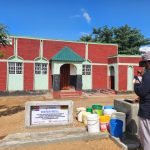
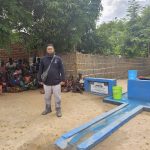
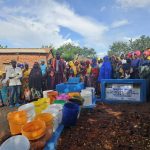
The current situation in Malawi
The country has been facing a fuel shortage which has disrupted all sectors of the economy. In both urban and rural areas, people have had to form long queues to receive deliveries. The fuel shortage has affected business owners like taxi drivers who cannot operate. The price of goods have also increased because the transportation costs have increased, and many goods are in short supply.
Malawi also has a shortage of foreign currency, which has hindered the country’s ability to purchase fuel on the international market and means fuel cannot be imported. In 2024, the Malawian kwacha was amongst the worst performing currencies against the US dollar with a depreciation of 67%. Tobacco which is Malawi’s main foreign currency earner has not earned as much in line with the decline in smoking around the world. But tobacco is not the only problem as the country has been suffering on all aspects.
With the shortage of fuel, there has been an increase in illegal fuel vending with fuel intended for regulated service stations being siphoned off and sold at inflated prices. This has further strained the supply chain. Even though the government has tried to secure fuel through international arrangements, the experts have warned the problem is not solved for the country’s long-term energy security.
In 2024, the country was affected by the soaring fertilizer prices which caused a severe cost-of-living crisis. Malawi, unlike some other African countries, relies almost entirely on imported fertilizers. This dependence makes the country vulnerable to global market fluctuations, supply chain disruptions and geopolitical issues like sanctions on Russian fertilizer.
Another issue facing Malawi has been the United States of America’s freezing of key development funds and global institutions tightening their criteria for giving aid. Malawi is highly dependent on aid and has fewer donors than neighbouring countries. The aid it receives makes up a large position of Malawi’s budget and is especially important for social services, such as healthcare and education. The US government was giving more than $350m (£282m) to Malawi annually, according to the US Department of State, equivalent to more than 13% of the African country’s 2024-25 budget.
The Malawian economy which was already in a fragile state had been devastatingly impacted by the aid freezes which affected everything from the healthcare sector to the agricultural sector.