In March 2024, Malawi’s president Lazarus Chakwera declared a State of Disaster in 23 out of Malawi’s 28 districts due to El Niño conditions. Part of Salaam Foundation’s work in the region involves the setting up of water wells in villages in Malawi most affected by the El Niño conditions. More than nine million people in Malawi are suffering from the effects of the El Niño drought and flood conditions.
By Fatima Moosa
Despite being classified as a normal climate occurrence characterised by late onset and prolonged dry spells lasting more than four weeks, the lack of rain in the very important January and February cropping season, has led to severe damage to crops. In addition it has negatively affected food production in Malawi, where over 80 per cent of the population depend on agriculture for their livelihoods.
The United Nations Office for the Coordination of Humanitarian Affairs (UNOCHA) has reported that between May and September 2024, approximately 4.2 million people faced acute food insecurity. Many people in Malawi have been and will continue to struggle to meet their basic food needs until El Niño conditions end in 2025.
The continuation of the dry conditions means that livestock will also be affected by the shrinking pastures and reduced access to water and an increase in disease. This reduced access to safe water because of the drying of water sources will increase the risk of waterborne diseases such as diarrhoea and malaria.
There is also a real threat to women and children who will be forced to walk longer to collect water. Young girls who are forced to travel further distances to collect water will likely miss school in order to help their families.
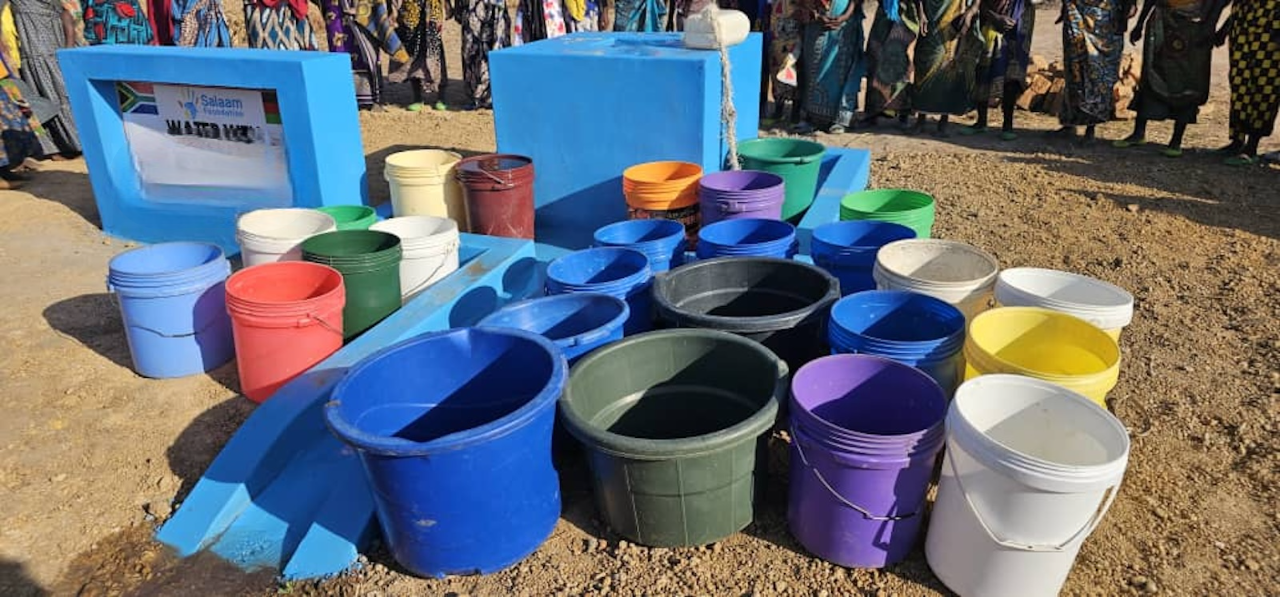
To help alleviate this situation, Salaam Foundation has been setting up water wells in Malawi. The latest project was opened on August 31, 2024, in the Nkalapwaga village in Mangochi District which is under Traditional Authority Bwananyambi.
The village is situated in the eastern part of Malawi. A representative from the village said the community were facing a dire need for water and the water well was welcomed. He thanked the generous donors who made the water well and the clean, pure reality a reality for the villagers. The water well will be able to serve several hundreds of the villages, made up mostly of women and children.
Water is a basic human right as outlined by the United Nations. However, more importantly, when the Messenger of Allah (Saw) was asked, “Which charity is best?” He replied, “[Providing] water”’. [Abu Dawud]. Water plays an important role in Islam as it is necessary for cleansing and purification of all objects, from cleaning homes to personal possessions, to personal hygiene. The water well will allow the community to perform ritual purification like wudu and ghusl to be able to carry out their religious duties.
This latest project is one of around 10 water wells that Salaam Foundation has facilitated in Malawi to help communities who are going through a very difficult time at the moment.