Just west of the Johannesburg CBD, in between Mayfair and Brixton, the suburb of Crosby can be found. It is a small area which has a lot of heart in the form of the IHSAN (Islamic Holistic School for Alternative Needs) Center.
The centre was established in 2007 to address the huge gap the founders identified in the Muslim community with regards to the community’s support for children with disabilities. The school started off with a single class of five learners with one teacher and one parent. It grew into a comprehensive education institution which works with the needs of individuals of all ages.
Sadiyah Bhagalia is a teacher at the IHSAN Center. Bhagalia has been teaching and running the centre for the past three years. She works with each learner to help maximise their growth and progress. The centre currently has six learners who attend the school everyday.
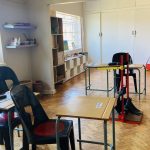
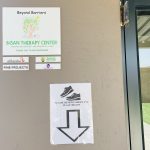
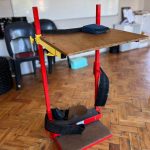


However, this is a massive drop from the pre-pandemic numbers which the school had. Pre-pandemic, the school had about fifteen full-time learners. However, the pandemic impacted the school in a huge way with many of the learners not returning. Despite the many challenges the school faces, they are hoping to grow and increase.
The school provides a safe space for learners in the community to learn and develop important skills – all with an Islamic ethos.
Bhagalia said there are no typical days at the school and every day is different. But the main idea is that the school is centred around teaching the learners life skills and independence.
“In the Muslim community, it’s like shame, shame and then just leave them. So we’re big on teaching them independence.”
This includes activities like getting the learners to unpack their lunch and put their lunches away. The entire schooling is based on a Montessori model from the play time to the lesson time. The lesson time includes working on the learners’ fine motor skills, bilateral integration and hand-and-eye coordination. These are all skills which the learners need to function in society. It is about teaching them skills which might not come to them naturally and helping them to be able to come to terms with it.
After the lesson time is completed, they have circle time where they go through some basic surahs and duas and Islamic etiquette. Another lesson time is dedicated to Makaton, which is a basic globalised form of sign language which is taught so that the learners who are non-verbal can communicate with the rest of the class.
Each day there is a different extracurricular activity. One day there is cooking, art and painting, messy play, physiotherapy and gardening. The extracurricular activities are a continuation of the theme of teaching life skills to the learners.
The final activity of the day for the learners is story-time and some Dhikr.
On Friday, Bhagalia spends some time with the learners doing Islamia learning. There are no Islamic obligations on the learners but Bhagalia uses the time to teach them about Allah, the creation of Allah and some basic Sunnah.
Bhagalia says she feels like she was chosen to be able to carry out this work and she considers it a huge privilege to be able to teach the learners and make a small difference in their learners’ lives.
When she joined, her boss told her: “They have nothing to give you but pure love” and this is something she realises on a daily basis.
Some of the landmarks that the students learn might seem small but for the students, even eating their lunch by themselves is a massive milestone for themselves and their parents.
“In most households, the burden of care is on the mother so it’s one more thing off their plate. I just want to say a short-out to the mummies – all the special needs mummies we see them. They don’t alway feel seen. It’s heartbreaking that other kids are meeting milestones and your child is not. I promise you each and every mum tries her hardest in her own capacity. I see the love that the child comes with everyday.”